01
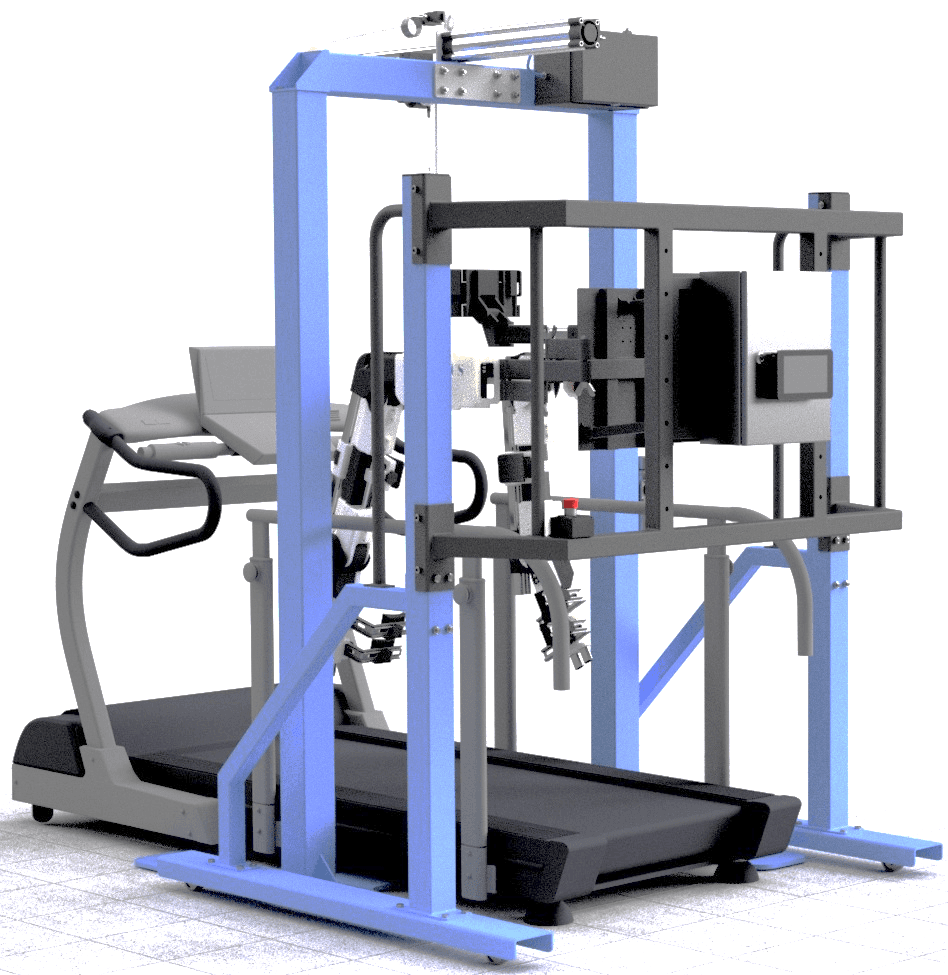
A-GEAR walking rehabilitation
Robotic exoskeleton support for gait restoration after stroke and neurological disorders.
Restoring Movement. Transforming Lives
RAIL develops intelligent medical robotics that help clinicians treat and assist people with disabilities, starting with the A-GEAR walking rehabilitation system.
ISO 13485
Medical device QMS
Class 2a
Registered in Kazakhstan
Patent 36342
Walking rehabilitation robot
About us
Robotics and Artificial Intelligence LLP creates robotic solutions using artificial intelligence to treat and assist people with disabilities.
Our mission is to improve quality of life by developing affordable, intelligent robotic technologies that restore movement and make advanced rehabilitation accessible to all.
Human-centered lightweight design inspired by biomechatronics
Adaptive AI-driven control with no manual tuning required
Rehabilitation workflows combining movement, safety, and cognitive engagement
Featured product
The system is designed for physical and cognitive rehabilitation with an adaptable exoskeleton, adaptive suspension system, rehabilitation treadmill, and mixed reality device.
Exoskeleton configuration adaptable to user parameters
Safe drives with software and mechanical protection
Intelligent controller adapting to real-time loads
Immersive virtual scenes for cognitive rehabilitation
Designed to stand apart
Compared with conventional gait systems, A-GEAR uses brushless DC electric motors with an intelligent controller and fully immersive virtual reality for cognitive rehabilitation.

Project portfolio
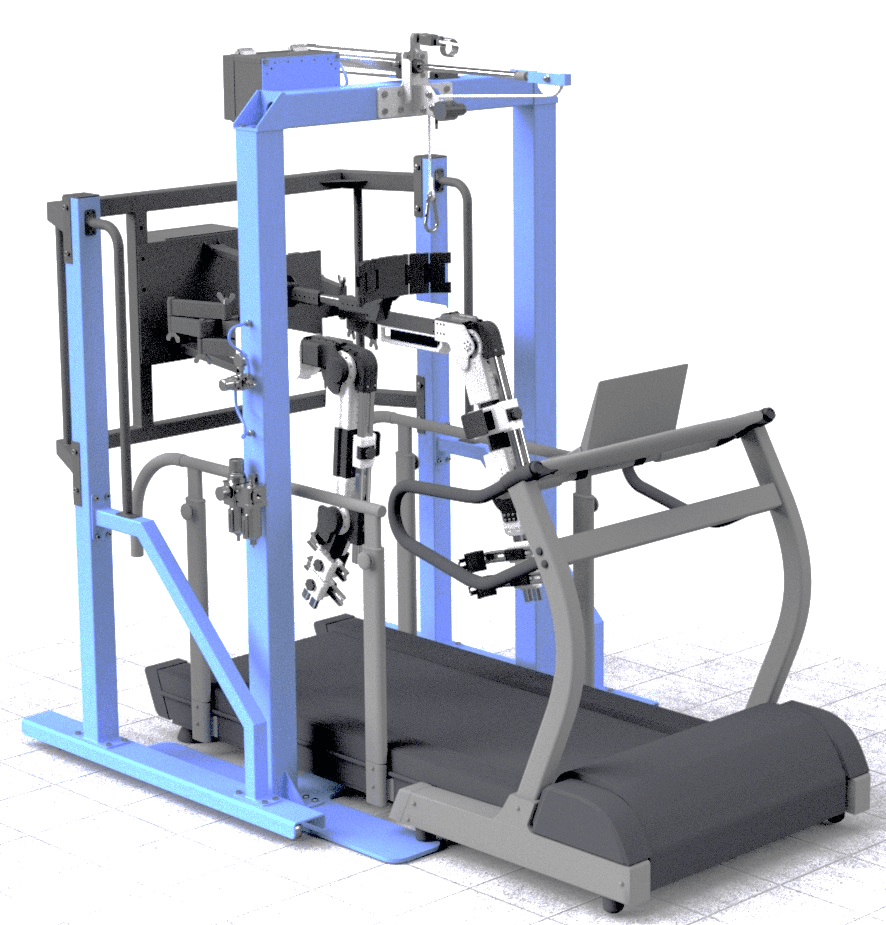
01
Robotic exoskeleton support for gait restoration after stroke and neurological disorders.
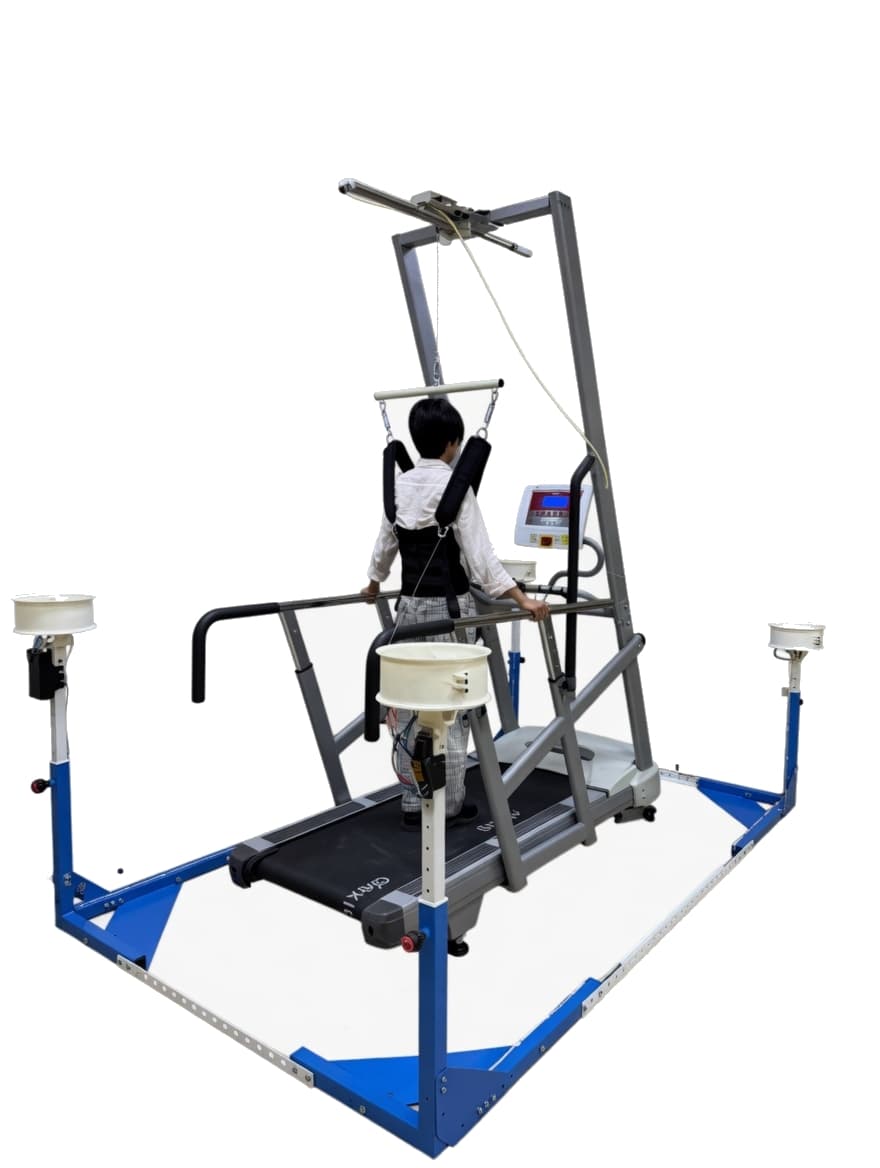
02
Clinical trials with adolescents diagnosed with cerebral palsy demonstrated measurable improvements in balance and gait stability.
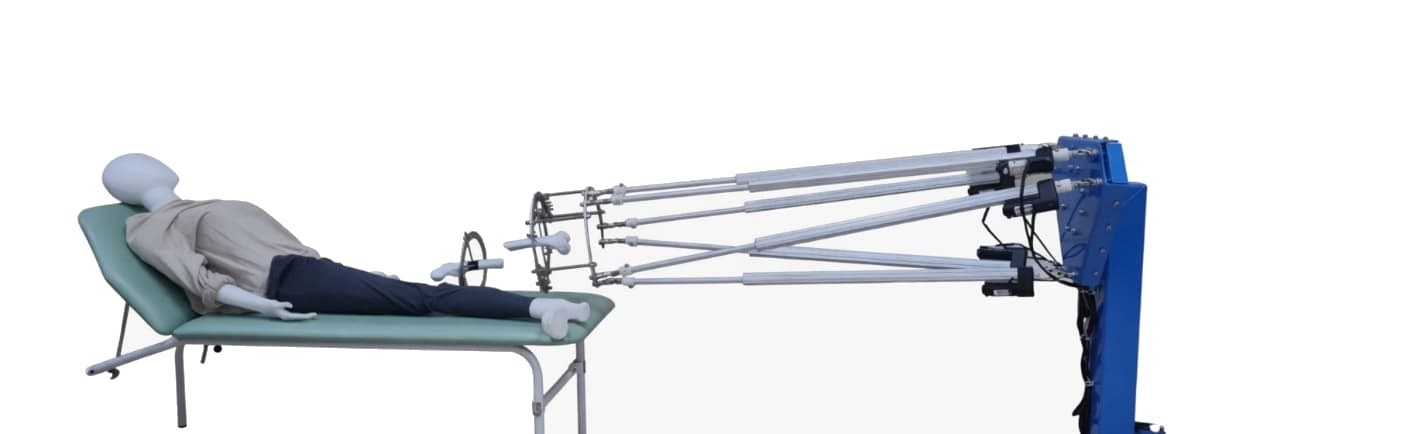
03
A robotic system concept focused on higher surgical precision, positional repeatability, and reduced radiation exposure.
Validation and documents
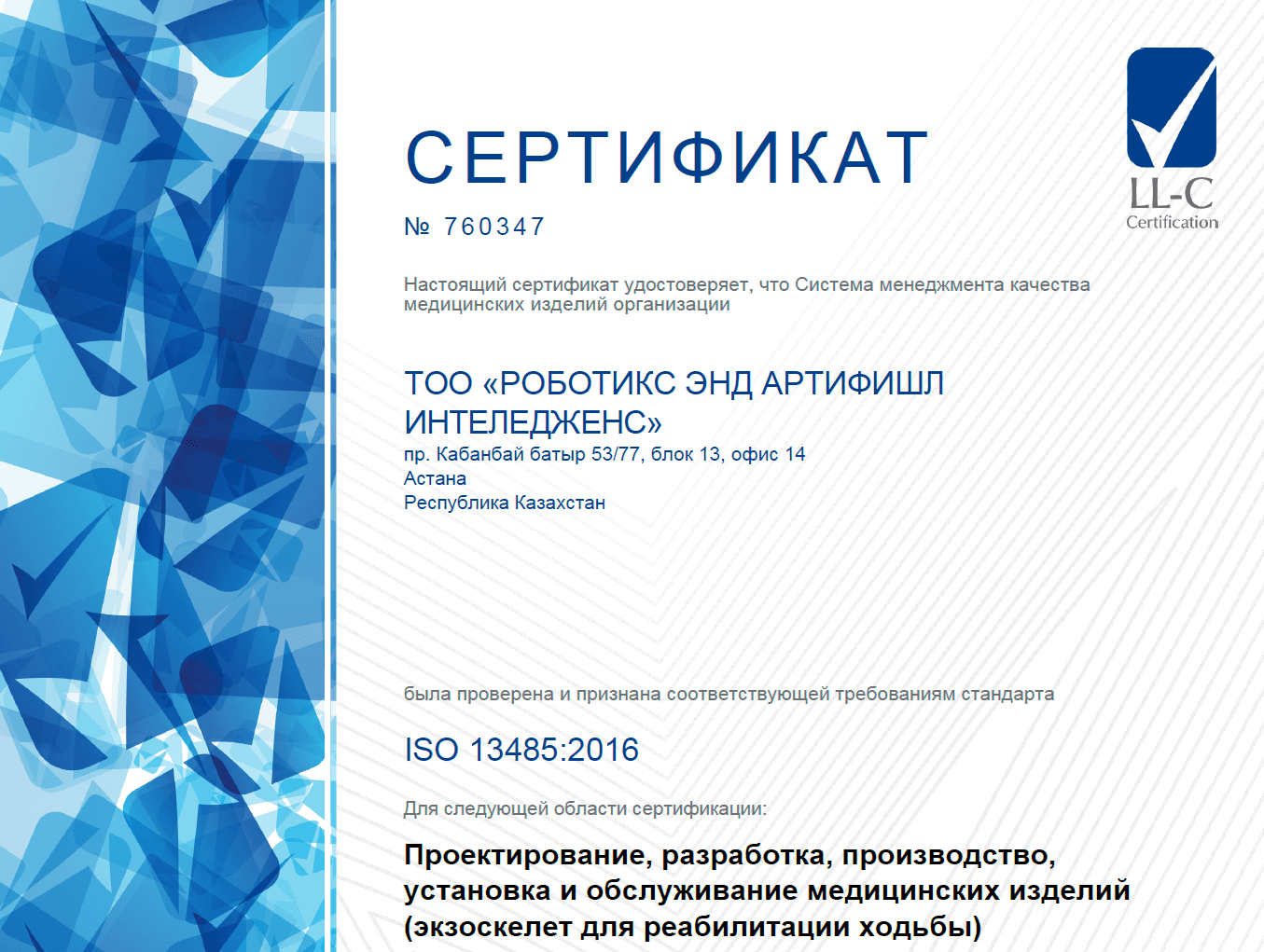
Quality management system for design, development, manufacturing, installation, and maintenance of medical devices for gait rehabilitation.
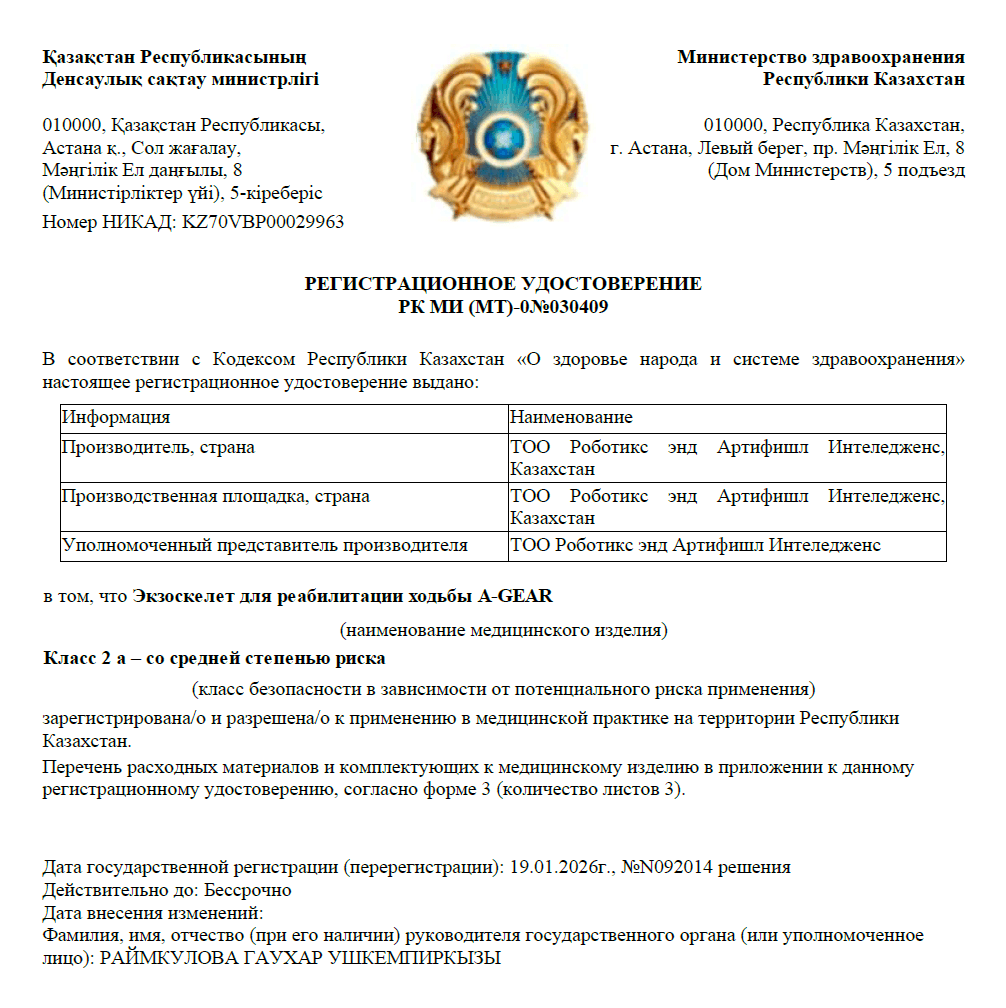
A-GEAR is registered and approved for medical practice in the Republic of Kazakhstan as a Class 2a medical device.
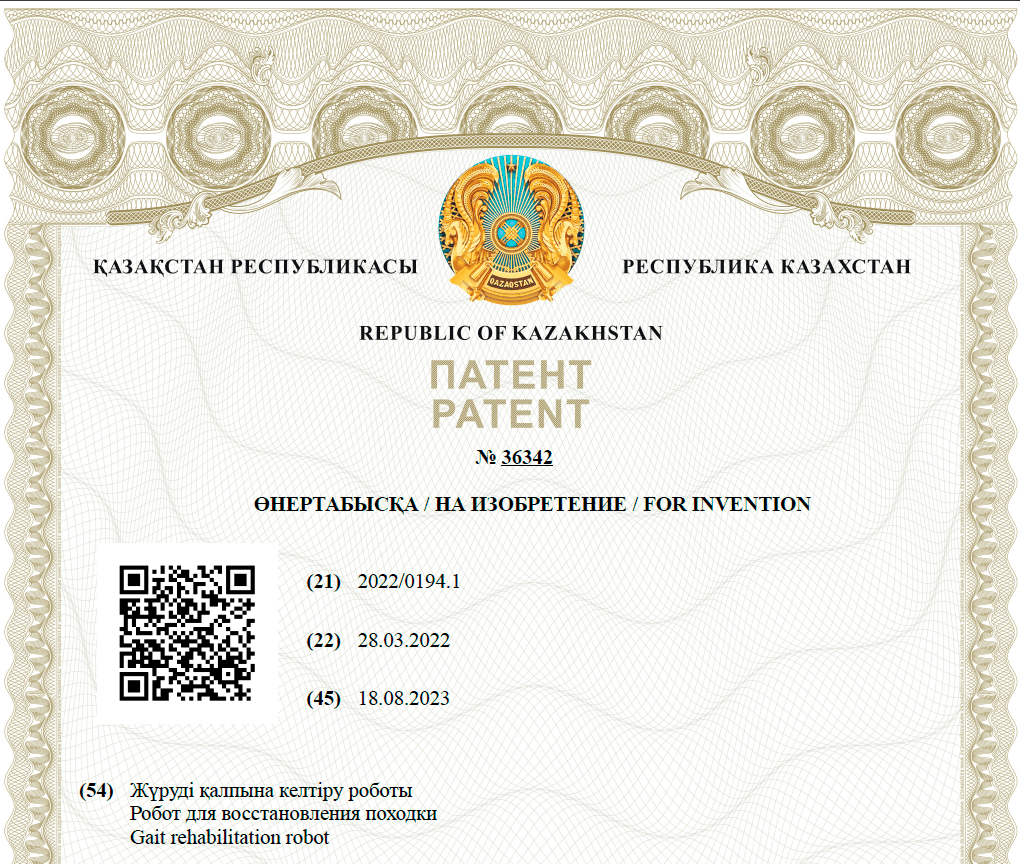
Kazakhstan patent for a walking rehabilitation robot, issued for the invention related to gait restoration robotics.
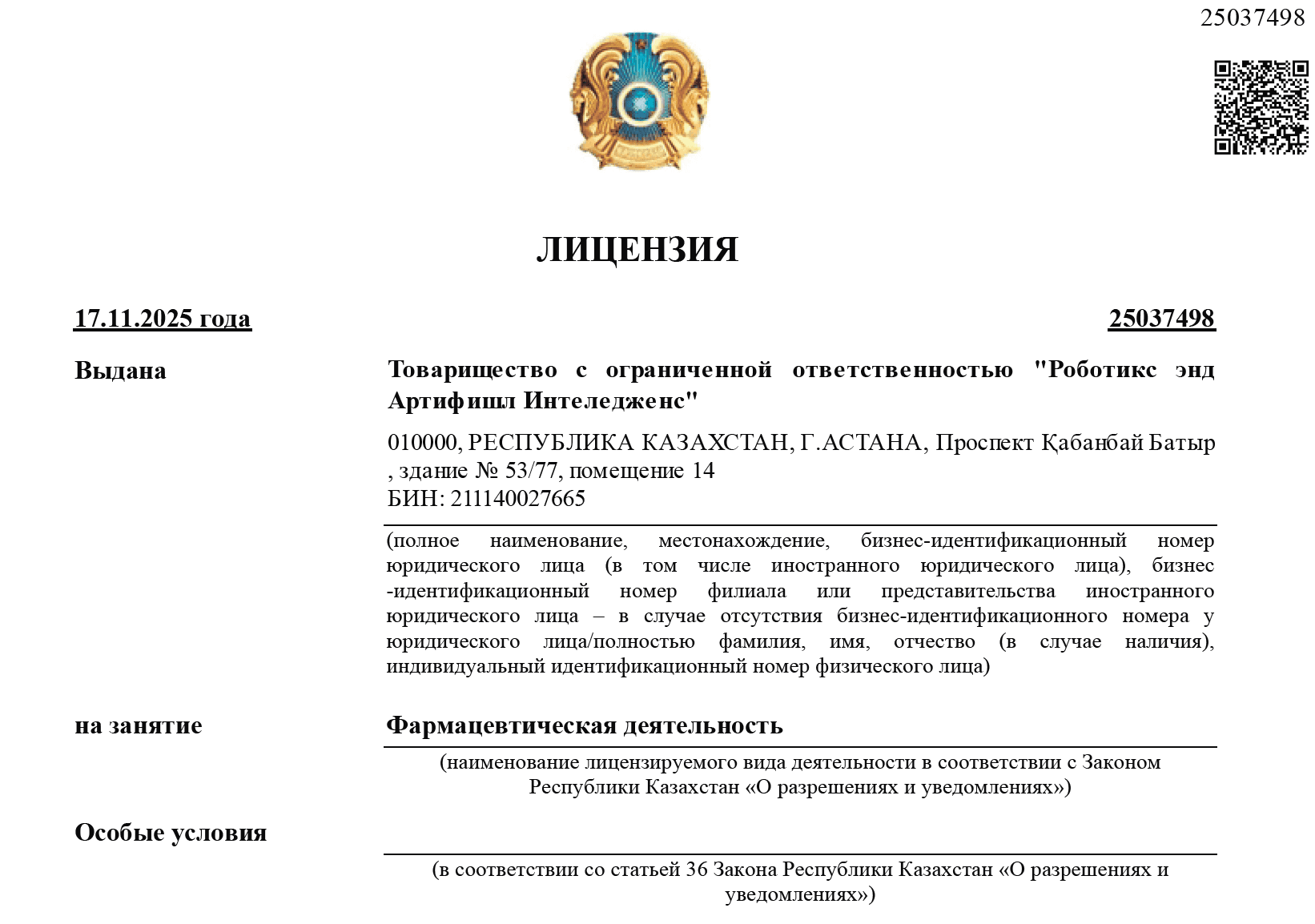
Licence for production of medical devices, issued by Kazakhstan's Committee for Medical and Pharmaceutical Control.
Research
Grants and investment
Patenting
Clinical validation
Laboratory testing
ISO 13485 certification
Kazakhstan registration
Delivery to the NDC
International market entry
Regulatory status
A-GEAR has completed the regulatory pathway required for a medical device in the Republic of Kazakhstan and holds international quality certification.
Certificate No. 760347 | Valid 30 December 2025 - 30 December 2028
Issued by LL-C Certification Czech Republic a.s. for the design, development, manufacturing, installation, and maintenance of gait-rehabilitation medical devices.
Registration No. RK MI (MT)-0 No. 030409 | Issued 19 January 2026 | No expiry
A-GEAR-V1 is registered as a Class 2a medical device and approved for use in medical practice throughout Kazakhstan.
Patent No. 36342 | Issued 18 August 2023
The patent protects the gait rehabilitation robot innovation and is held by Nazarbayev University Autonomous Organization of Education.
Licence No. 25037498 | Renewed 17 November 2025
Authorizes RAIL to manufacture medical devices at its Astana production facility at Kabanbay Batyr Ave 53, Nura District, Block S4, Office 509.
Standards
A-GEAR is designed and tested in accordance with international standards for medical-device safety, risk management, and software.
IEC 60601-1 - Basic safety and essential performance of medical electrical equipment
IEC 60601-1-2 - Electromagnetic compatibility (EMC)
ISO 14971 - Application of risk management to medical devices
ISO 20417 - Information supplied by the manufacturer of medical devices
IEC 60529 - Degrees of protection provided by enclosures (IP Code)
IEC 62304 - Medical device software life cycle processes (Class B)
Clinical evidence
A-GEAR has been evaluated in two formal clinical programs, demonstrating its application across adult stroke rehabilitation and pediatric cerebral palsy rehabilitation.
CS1
Multidisciplinary Hospital named after Prof. Kh. Zh. Makazhan, Karaganda
Ten adult patients with post-stroke lower-limb motor deficits underwent supervised A-GEAR therapy using the exoskeleton, treadmill, and body-weight support system. Outcomes demonstrated improvements in gait initiation, step symmetry, and walking endurance.
CS2
National Centre for Children Rehabilitation (NCCR), Kazakhstan
Trials with pediatric patients evaluated support for natural gait patterns in cerebral palsy rehabilitation. Therapists used suspension support and selected VR sessions; clinical observation confirmed improved walking patterns and greater active participation.
Research and funding
A-GEAR draws on more than 17 years of peer-reviewed research in mechanical design, control algorithms, and clinical methodology.
Research Funding
Results
Patent
Publications
Prototype
Clinical approval
Team

Technical Director & Co-founder
Leads engineering architecture, system design, and medical device development across the A-GEAR platform. Responsible for translating research concepts into manufacturable, certified medical hardware. Brings deep expertise in mechatronics and product engineering for clinical-grade robotic systems.

Director & Co-founder
Provides company-level leadership and operational direction for Robotics and Artificial Intelligence LLP. Oversee business development, regulatory strategy, and commercialization.

Chief Engineer, Software & Co-founder
Drives all software and controls engineering for the rehabilitation robotics platform, including the intelligent adaptive controller, the operator GUI, and drive firmware. Holds deep expertise in embedded systems and real-time control, and is a key contributor to A-GEAR's AI-driven assist-as-needed architecture.
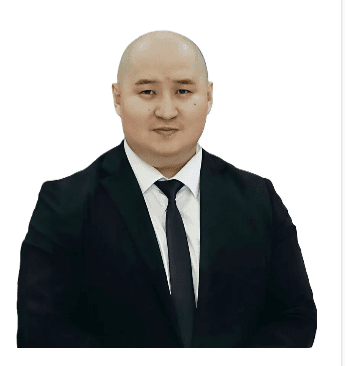
Head of Key Accounts & Partnerships
Leads commercial strategy, institutional relationships, and clinical partnerships. Primary interface with hospitals, rehabilitation centres, and national health authorities. Responsible for the first commercial sale and delivery of A-GEAR to a national rehabilitation centre in Kazakhstan.
Contact